The heading could have been ‘The Lost Village of Hallsands’.
Hallsands was a once thriving little fishing village, snuggled under the cliffs of Start Bay. In 1917 heavy seas washed most of the village away. But perhaps the story needs to go back further, for in 1890, expansion was in hand at dockyards in the Plymouth area and at Hallsands, an off-shore shingle bank was dredged away to provide ballast for concrete for the Naval dockyards.
It appears probable that this removed
Hallsands vital protection from the mighty sea and doomed the village to an
unstoppable destruction. There were many protests and problems in the ensuing
years, but then, on
January 26th 1917, a combination of easterly gales and exceptionally high tides
breached Hallsands' defences. By the end of September 27th only one house
remained habitable. Miraculously no one was killed, but the villagers were now
homeless.
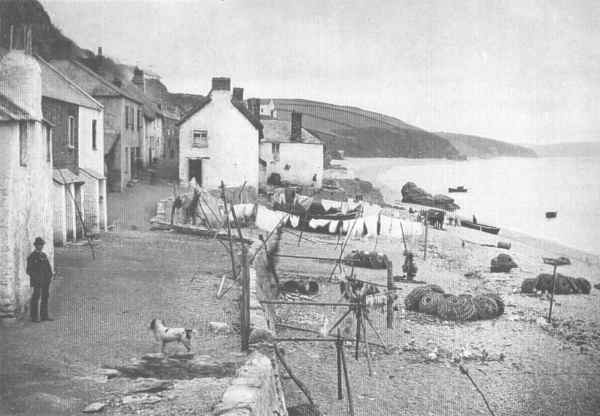
This was Hallsands in 1885 with
thanks to www.hallsands.org.uk.
It isn’t possible for most people to reach the same spot today. A viewing platform has been created above the far end of the former village.
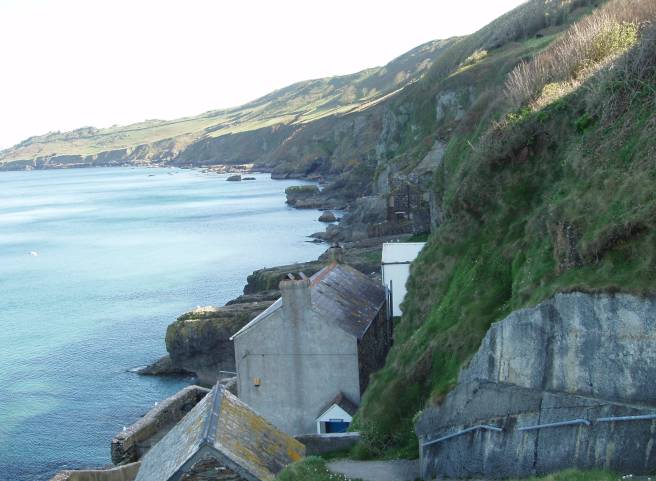
That, presumably, was the one remaining habitable house.

Further round, and hard to photograph, were a few ruined bits of house, but roadway and beach have all gone entirely. A couple of photos on the explanation boards give some idea. Of what was and then what happened.
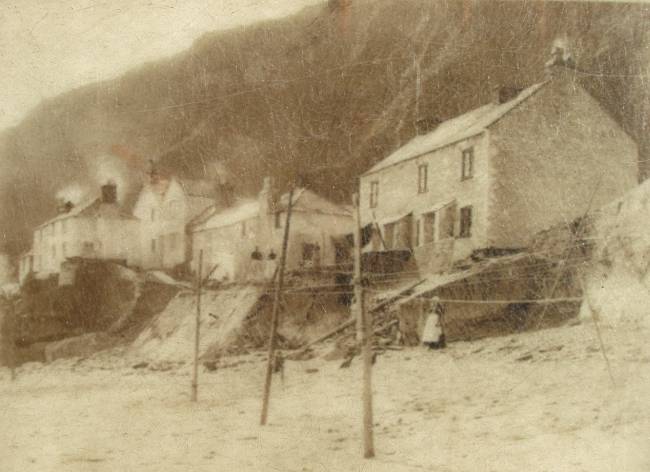
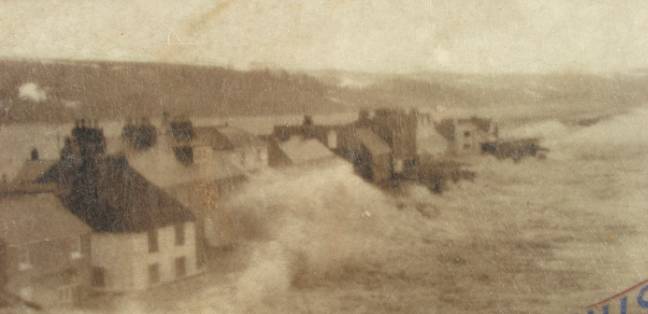
There’s an ‘as was’ photo and below is a storm which did damage at Torcross in the 1990s.
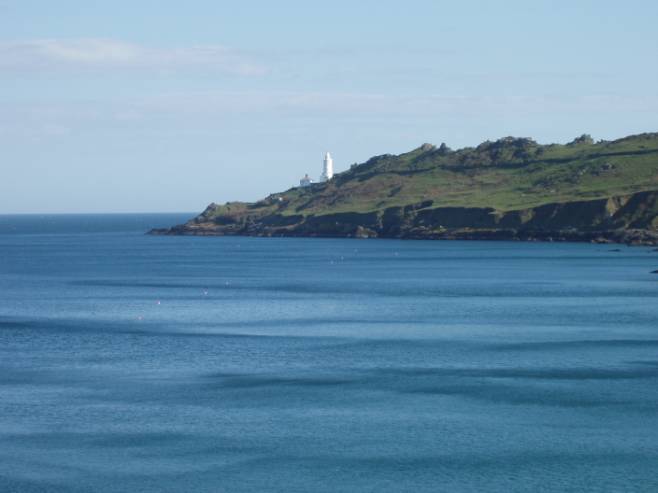
But on this day, all was calm and quiet, just around the corner from Start Point.

We wandered along a bit of the coast path to=wards the newly (after 1917) created settlement of North Hallsands. But on the cliff tops above old Hallsands was a former hotel - also created after the devastation of 1917. This has now converted into swish apartments but bearing a sign saying the foundation stone was laid by Patience and Ella Trout.
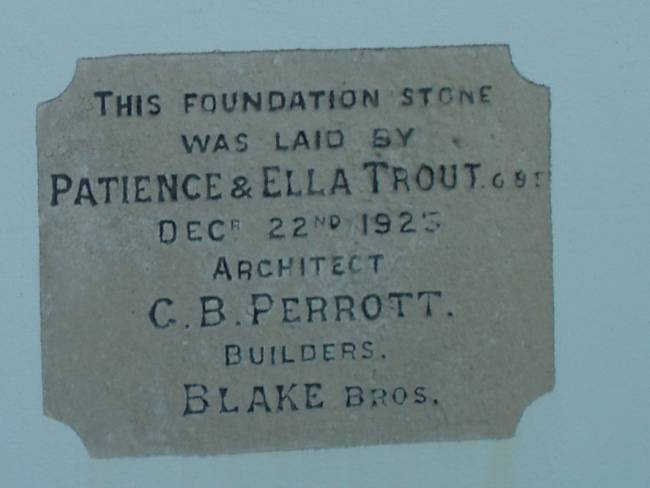
Well who on earth were they? Wikipedia can help
On 8 September 1917, Ella was out in a boat crab fishing
with her 10-year-old cousin, William Trout, when they saw the SS
Newholm struck by a naval
mine, one mile south of Start
Point. They along with William Stone, another fisherman in the vicinity, rowed
to the scene and helped rescue nine men. Ella and William Trout rescued one
sailor, but with the tide and the wind against them, they were unable to row
back to shore. They, in turn, were towed back to safety by William Stone. In
recognition of her bravery, she received the Order
of the British Empire.
The sisters, with compensation for the destruction of their
cottage at Hallsands and their own earnings, built Trout's Hotel on the cliff
above the deserted village. The hotel was run successfully until 1959.
But oddly, as I write this on April 25th, I can say that a couple of days ago, in Market Lavington Museum, I was chatting with a couple of elderly ladies, one born in the 1920s, who knew the Trout sisters in their childhood, Ella, it seems was quite a butch lady who was full of fun and joie de vivre. In chatting to these ladies in Lavington we talked about the campsite we were on in Devon at Cotmore Farm. ‘Oh, Uncle Charles used to have that’, they said.
But back to the 12th April.
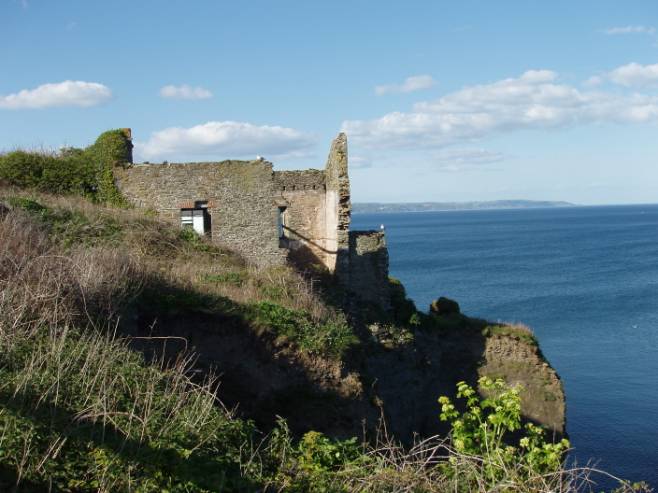
We found more derelict houses as we went over the cliff top between Hallsands and North Hallsands. Nature tends to win out in these wild places.
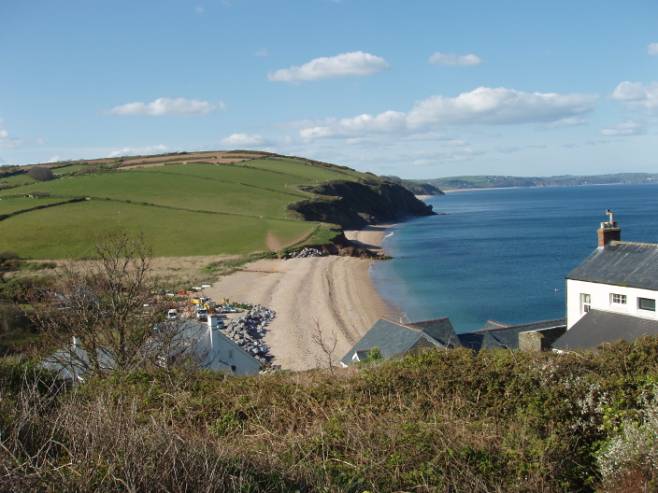
There was the beach at North Hallsands but the post 1917 houses were built a bit away from the wild waves.
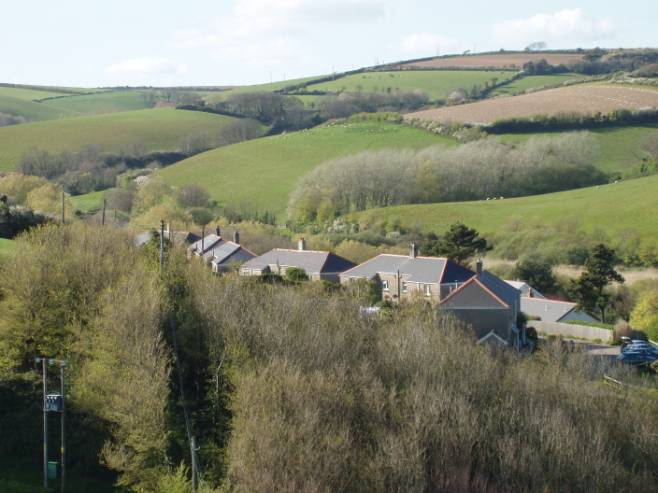
There they are in a peaceful Devon valley with gentle hills around.
For us it was time for tea so we were making the couple of mile journey back to our tent.