Our destination on our walk was a small bay and a ‘holy well’. We wondered if we had found the well here.
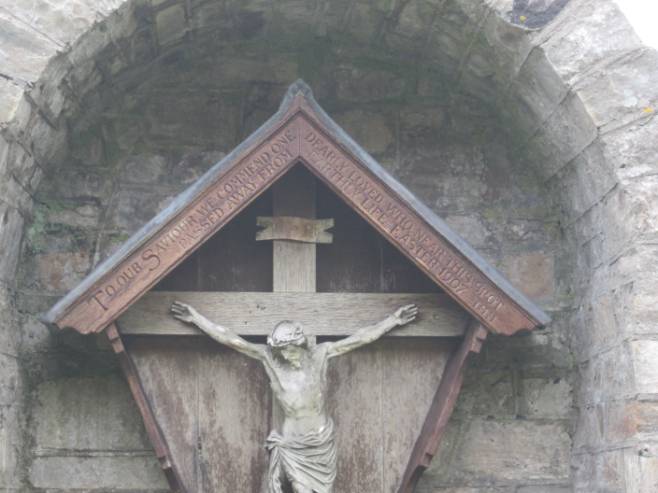
But no, this was a wayside shrine by a very minor way. It reads:
‘To our saviour we commend one dearly loved who near this spot passed away from earthly live Easter 1907 IMM’
Just who the dearly loved one was does not seem to be recorded.
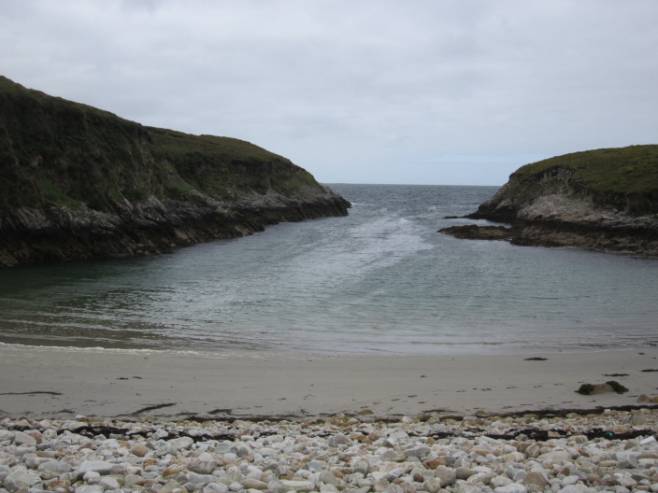
Soon after we reached the delightful little bay. This faces slightly west of North and was surely a well-sheltered little haven most of the time.
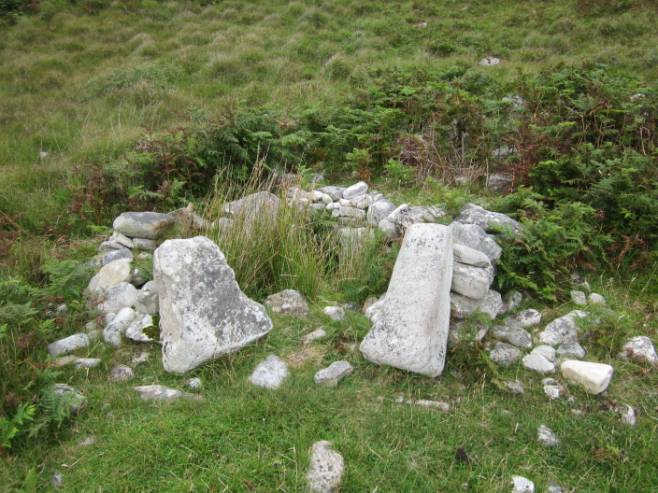
And that is the so-called ‘Holy Well’. In Catholic Ireland there are many of these. What makes this one holy, I know not.
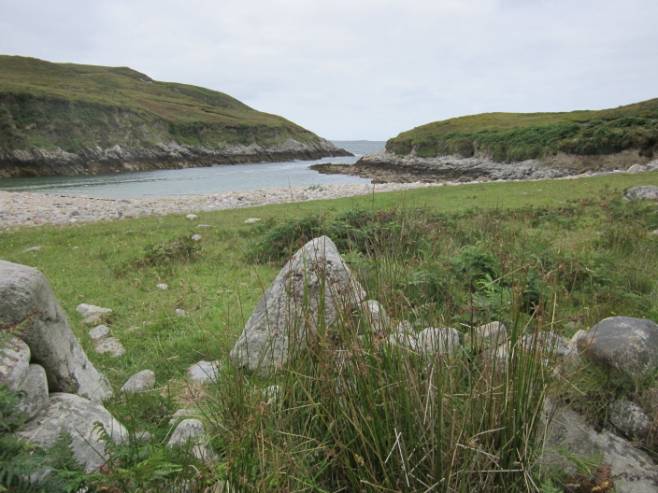
The well and the bay. Maybe storm tossed mariners found safe haven and then found drinking water and thanked their god for deliverance – that’s only a guess.
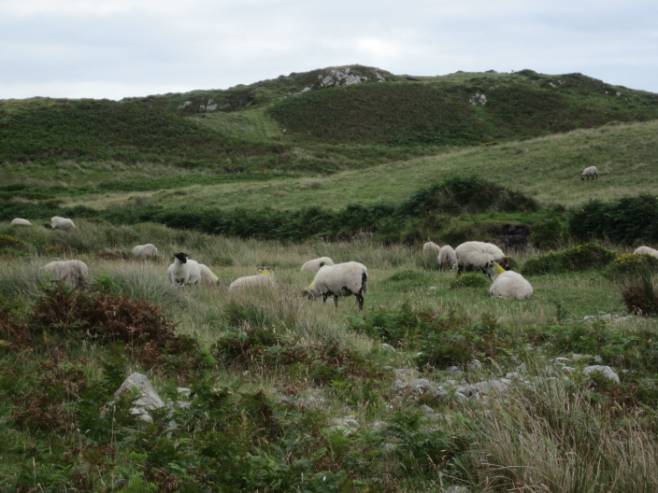
Was the well holy to the local sheep? I’m sure a farmer was thankful that water was provided for them.
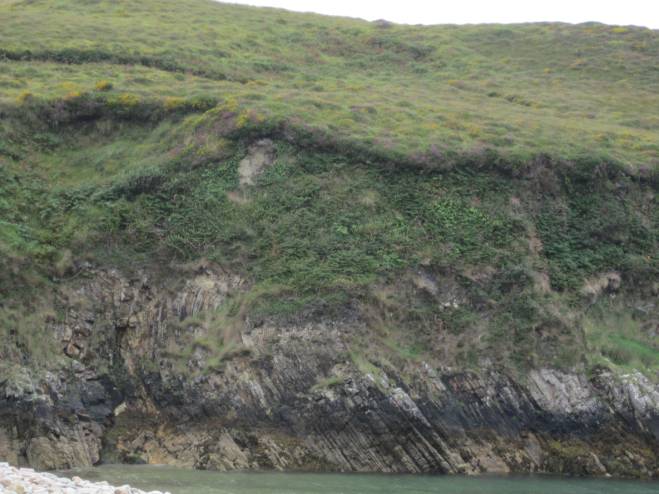
This is one for the geologists who can get ever so excited about rippling strata in rocks.
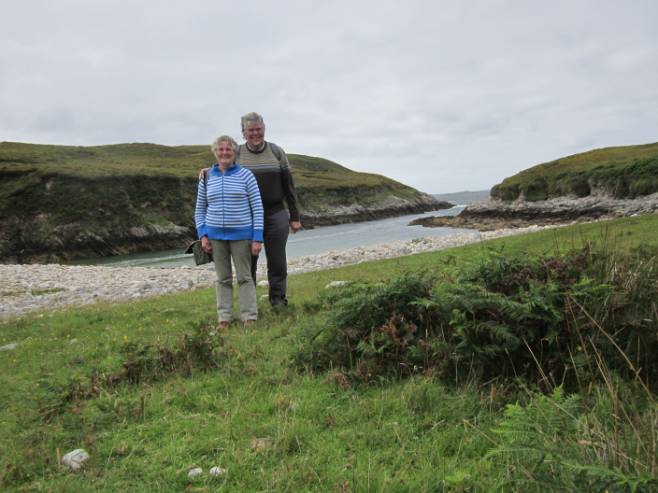
A pair of walkers by the bay.
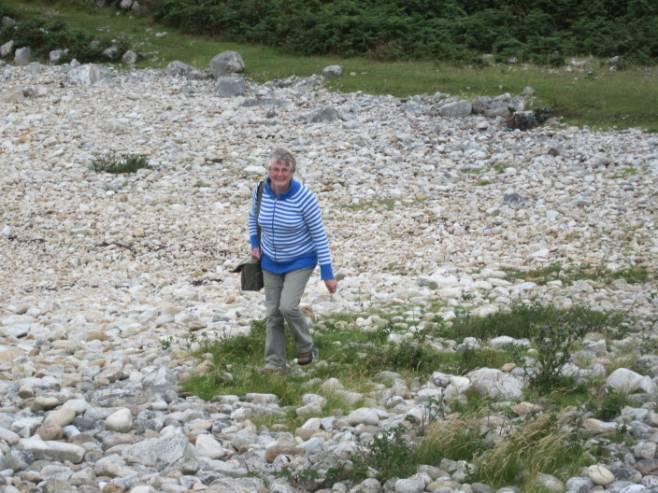
Actually, the bay made for quite troublesome walking.

A pair of big babies grad a drink.

We were now on the return walk and there’s the jetty at Cleggan

Cleggan cottages have a newness to them. I suspect this little locality has benefited from the influx of European money, the improved road network and the influx of tourists heading across to Inishbofin.

We were, of course, across the Atlantic Ocean – or a small inlet of it.
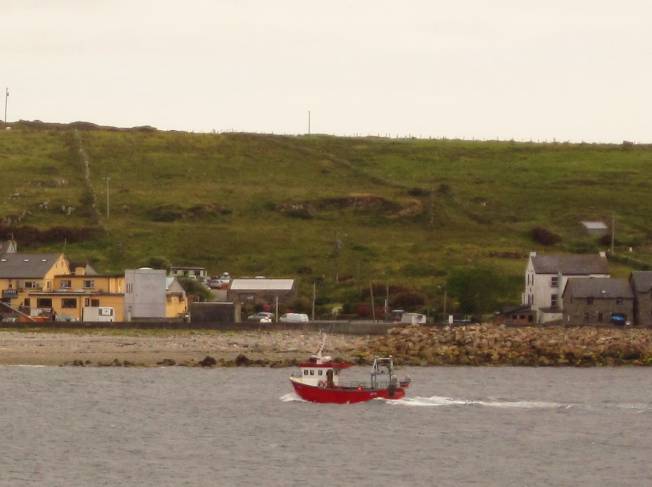
A fishing boat made its way into Cleggan.

Another boat, a little further out in the bay.

Aha! It is the ferry from Inishbofin. We had watched its progress across the sea for some time.

And there, with the Twelve Pins as backdrop, was the farm, with a row of holiday-let cottages.
Thanks Mr Archaeologist – a lovely walk. Well actually, we thanked him personally and discussed what we saw and we pointed him to another, probably less ancient archaeological site nearer the campsite. It is marked on the map as ‘Cillin’.
We had plans to revisit it, 40 years on and this evening was to be the time.