Mallaig has features in common with Oban for it is another gateway to the Isles. But it is much smaller than its more southerly counterpart. The local board of trade must love the arrival of the Jacobite which brings in something like 300 visitors for close on two hours for each summer day.
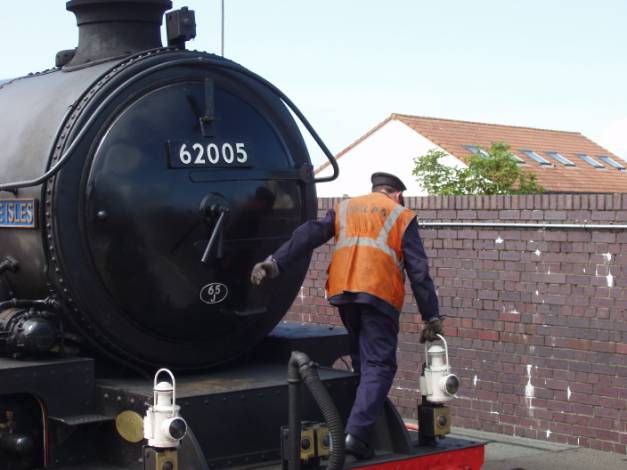
For the crew it is time to work, of course. The train description lamps need removing for, sadly, there is no turntable at Mallaig these days (there may be soon) and the loco will have to work tender first back to Fort William. I see the loco carries the shed code of 65J which was Fort William or its Mallaig sub shed. However, in 1959 this locos home was actually Darlington.
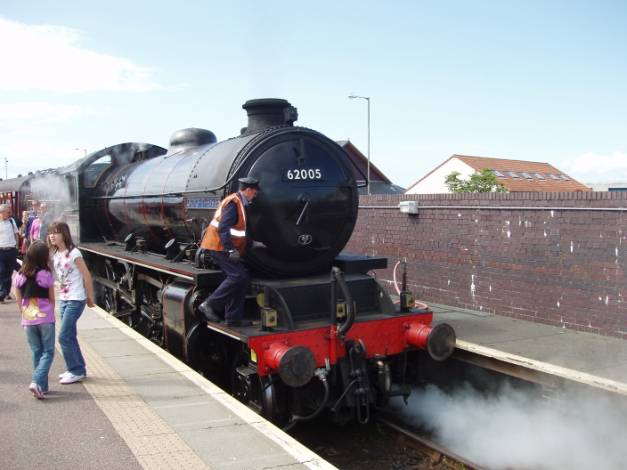
Travellers were still keen to pose by the loco and, of course, a rush hour sized crowd was streaming off the train and into the little town.
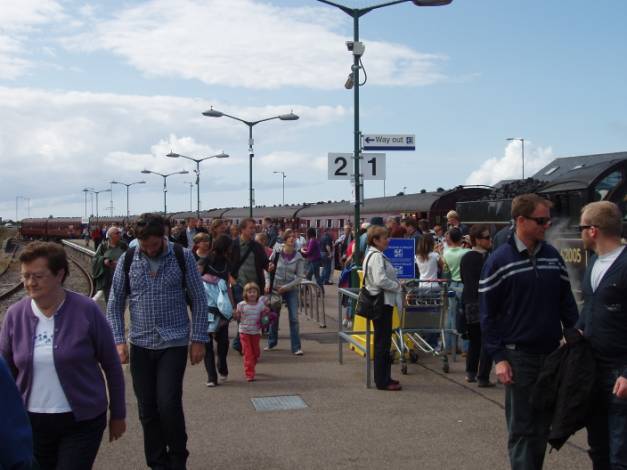
You can see the back of the train there – the last coach is off the platform even here. Our loco did well to manage a train, longer and heavier than expected on this line.
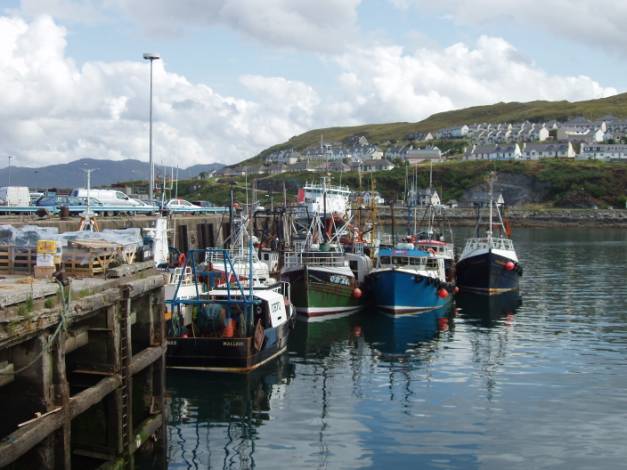
We joined the throng – but rapidly lost them – and made for the harbour. Back in 1970 we had been amazed by the numbers of seagulls around the bustling fishing harbour as we waited to join the MacBrayne’s boat Loch Seaforth for a journey up to Kyle of Lochalsh. Fishing may have declined but it still goes on. And today’s ferries under the Calmac banner continue to ply.
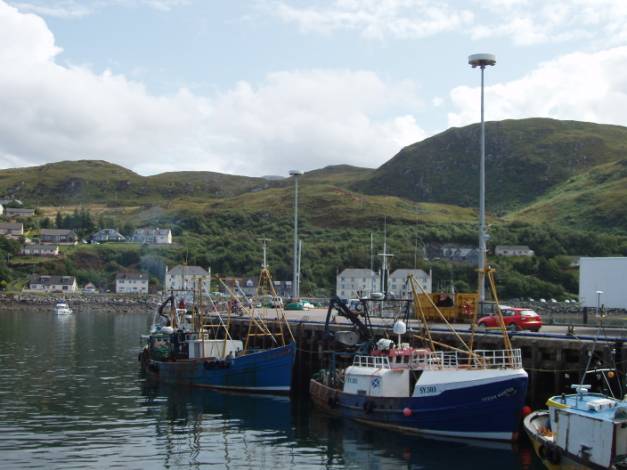
Fishing boats and the arrival of a ferry.
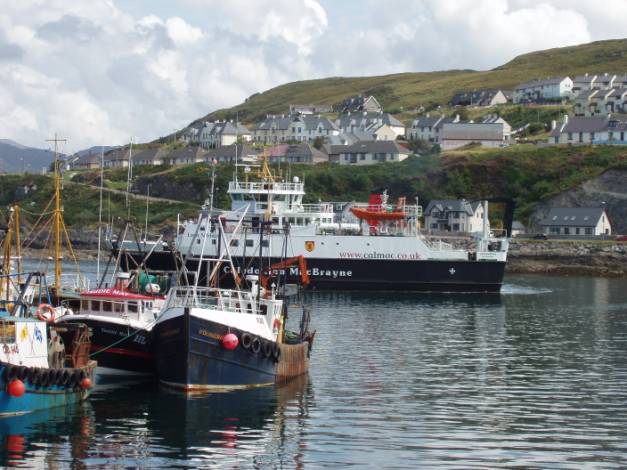
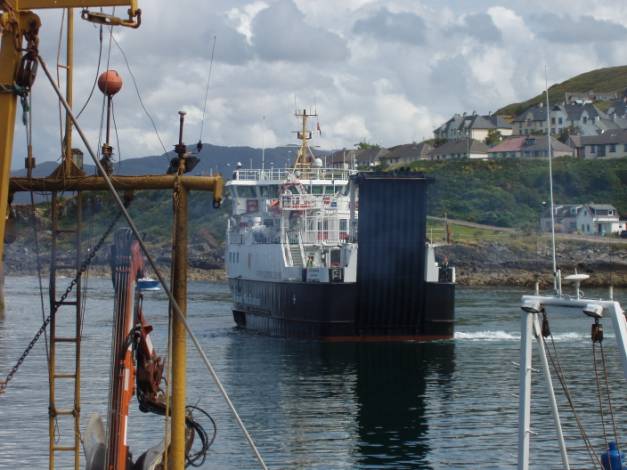
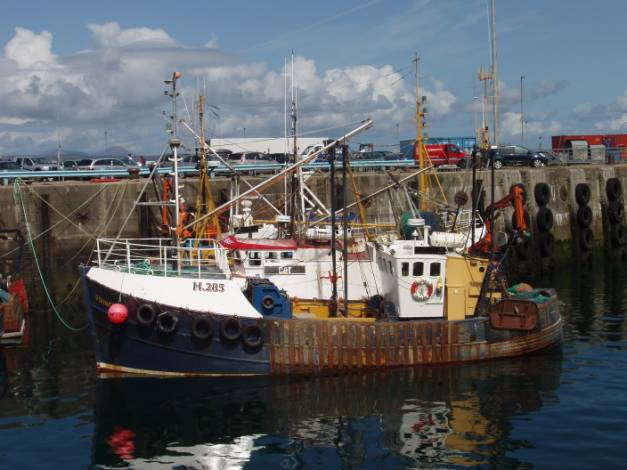
Another fishing boat whilst the ferry manoeuvres.
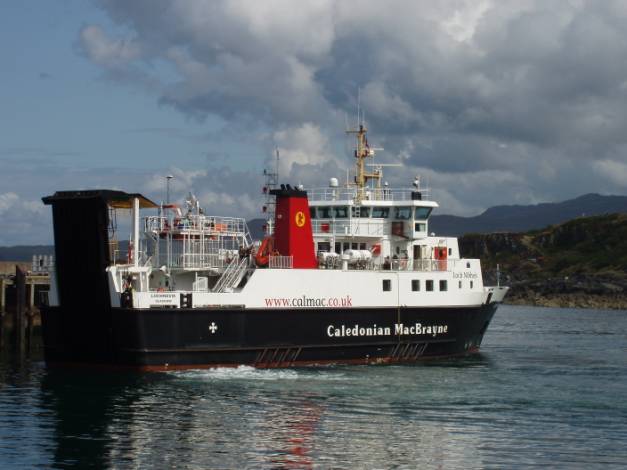
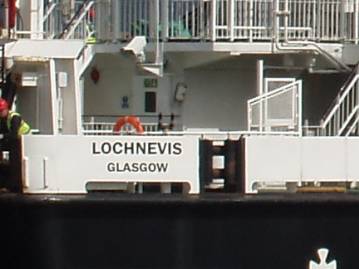
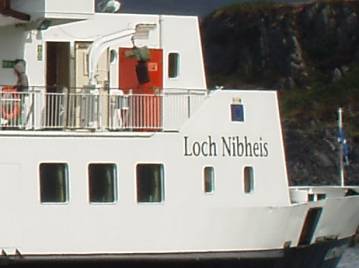
She’s called the Loch Nevis, in English and Gaelic.
|
|
|
Mallaig isn’t set up for its daily influx of picnickers. Seats are limited but we found a pair of pallets to perch on whilst we ate our bait.
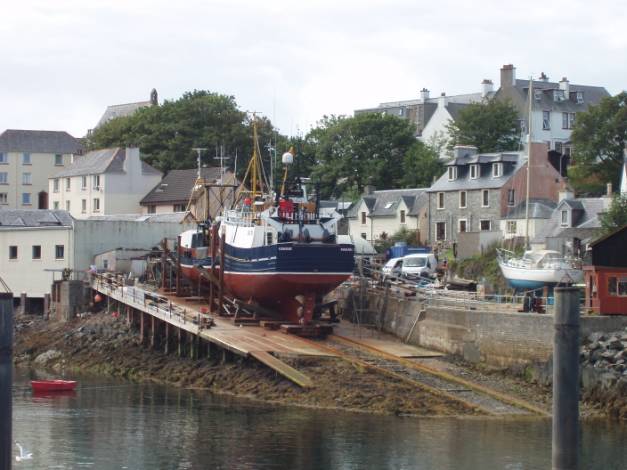
We could see the slipway with some of the little town beyond.
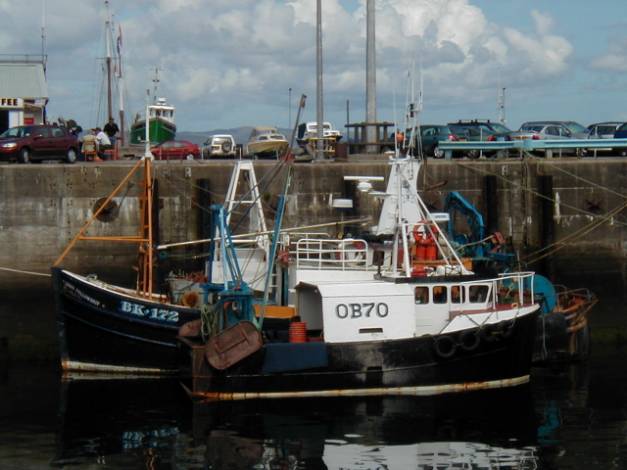
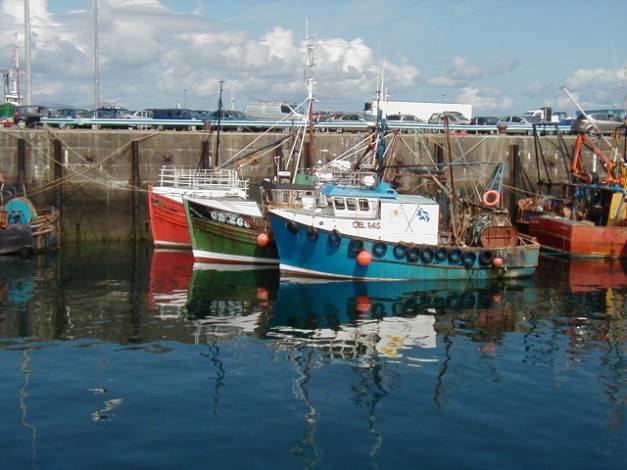
Another fishing boat caught the eye of the photographer. And yet more with their pretty, ripply reflections.
I took a walk to the edge and saw something in the water which brought the seated picnic to a stop. I’ll leave that until next time.