Once again, I have the dilemma of portraying things that could give a false impression so let’s start by getting things straight again. We stayed in a flat in Daliburgh. It was fully equipped with mod cons. There was a satellite TV and DVD player for entertainment. There were most facilities needed in a kitchen. There was modern, comfy furniture. There was heating as and when needed. All in all it was brilliant and gave no impression of being in a significantly different world, economically speaking, than we’d have got at home. The locals drove around in modern cars and used their computers much as we might.
But agriculture was a bit different and as we passed a crossroads to the south of Daliburgh, near West Kilbride, I had to stop and take a further look.
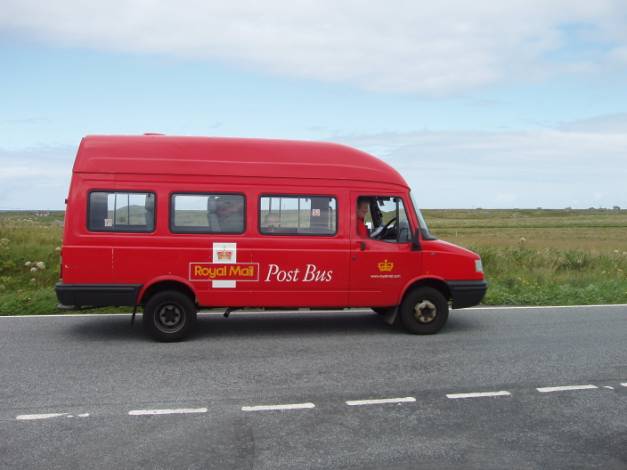
Well no, it wasn’t the post bus that made us stop. Combining the postal collections with a bus service does seem like a very good idea. Neither did we stop to see a man who chatted to us. He wanted to know the reason for our stop. He was waiting for the post bus and jolly nearly missed it because he had taken an interest in us.
For a moment, he seemed just a bit scary. He was a large, gnarled and weather-beaten chap and he came over and growled at us. We were not aware that we were doing anything wrong and I figured that the driver of the post bus might rescue us if things turned nasty.
The growling at us continued, yet the face actually looked friendly, if a bit baffled. We spoke back, talking of what caught our interest and the growling stopped and genuine talking began. It was a bit guttural and hard to understand, but now he talked English, rather than the Gaelic growls, we could have a conversation. Yes, we had met a genuine Gaelic speaker who, realising the bus was setting off without him, made haste to catch this service which hurried off towards Daliburgh.
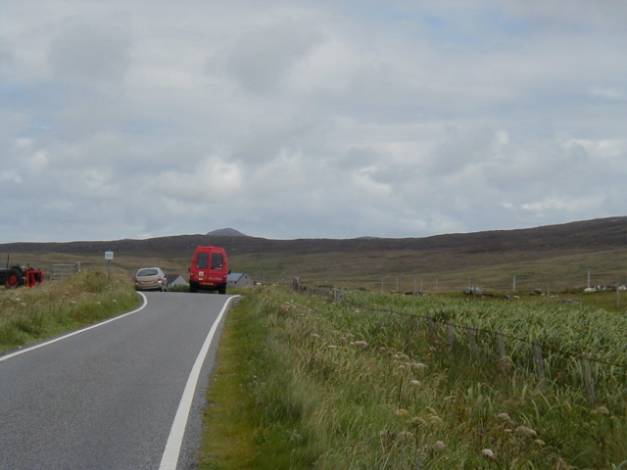
And we were left to look at the agriculture which had caught our eye.
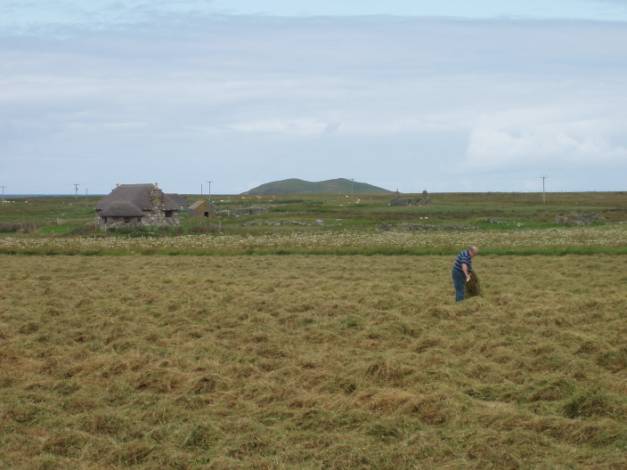
Out in a field, on the machair and with not too bad a sky, a man was making hay. One would have thought this was unpromising on South Uist, set there in the wet Atlantic Ocean, but his hay did not look too bad.
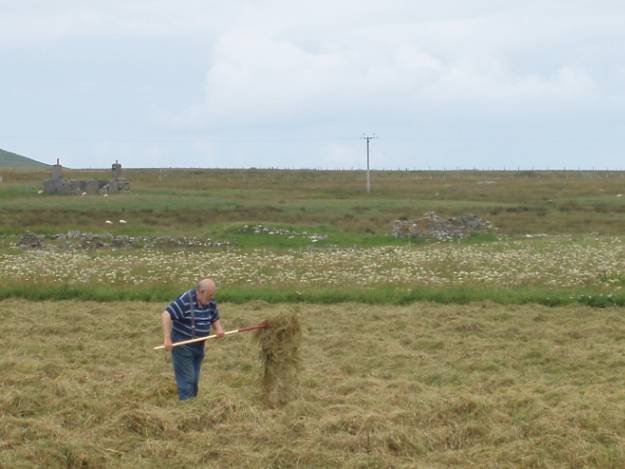
The hay was being turned by hand – and fluffed up to try to get a drying airflow through it. That’s something we just would not see in the south of England – not even with what looked to be a brand new pitchfork.
By the way, in the background was one of those lovely old cottages with the thatch roof weighted down with huge stones. There was nothing touristy about this one’
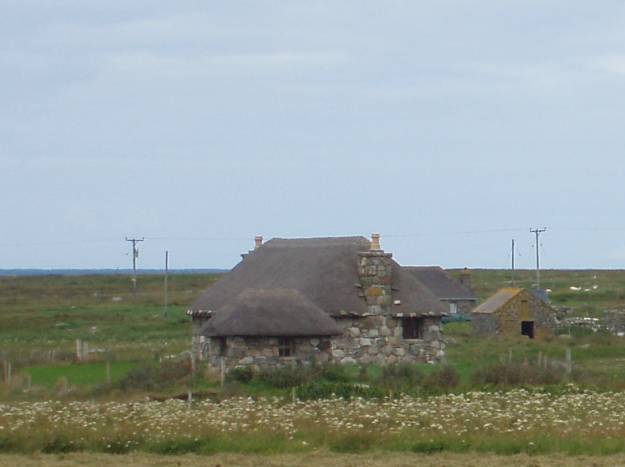
And behind the cottage was the azure main – the broad Atlantic.
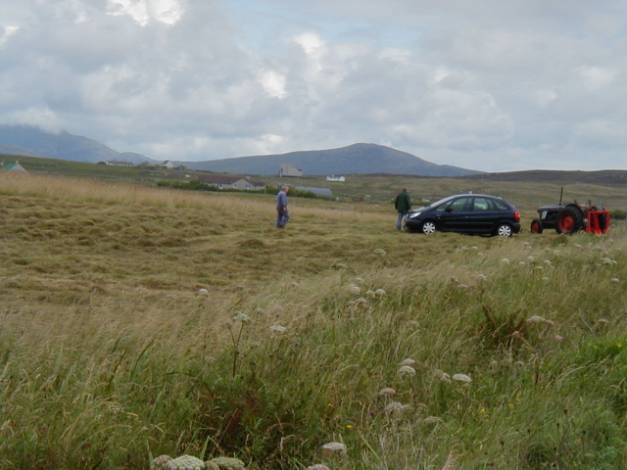
Another pair of chaps were about to leave the scene in their modern car – it seemed a bit of an odd mix to see a car that was newer than ours with such an old style of farm work. We talked to these chaps who were not altogether sanguine about the prospects for it staying dry. They seemed to expect that the hay would be ruined.
The tractor would have been something seen at shows back home for it was the standard tractor of 50 or more years ago – the Grey Fergie.
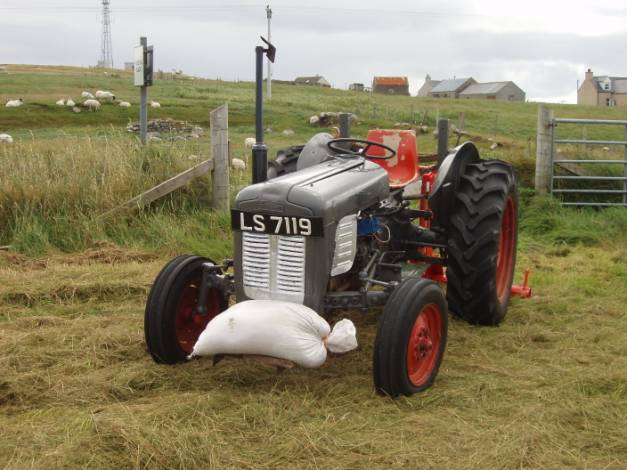
For the record, much later in the day, in drizzle, we saw the Fergie at work with a small baler producing little rolled bales of hay. I do hope the quality was OK.
|
|
|
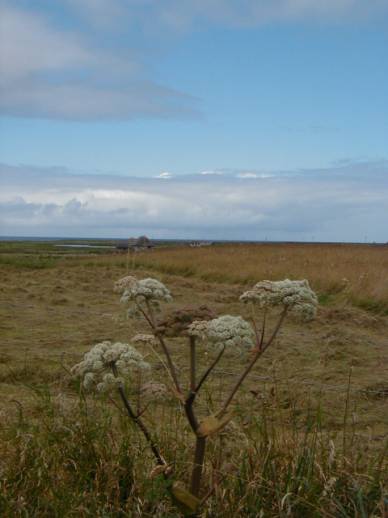
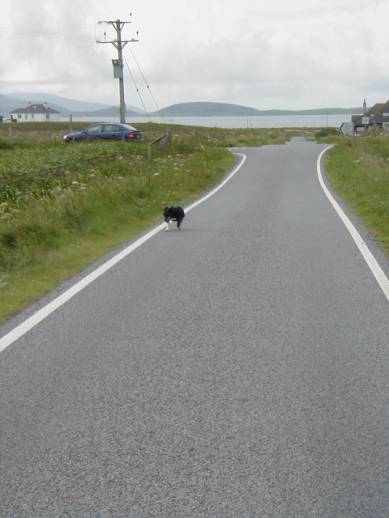
Let’s finish with some roadside views. On the left is one of those wonderful umbeliferous plants that featured in the area. On the right is our car, parked at the cross roads in this south facing view. I know nothing about the dog.