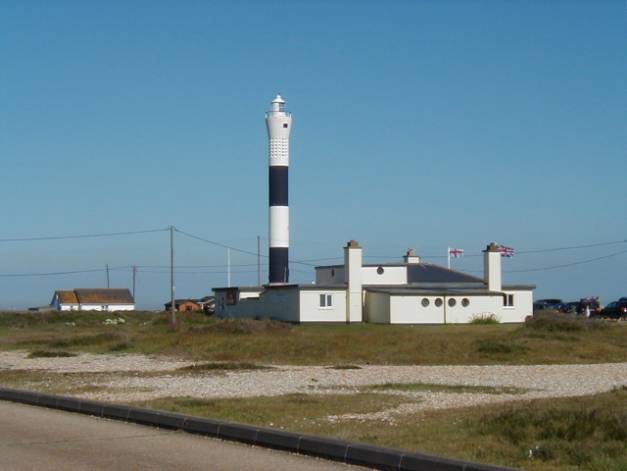
This is the so-called ‘new’ lighthouse at Dungeness, which is actually some 50 years old. Like its predecessor, it is quite some distance from the end of the spit of land.
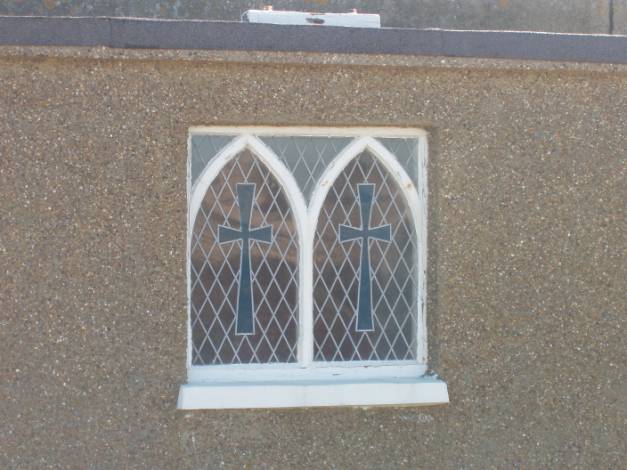
Near the ness end there are a number of concrete buildings, which may have had a military origin. It was clearly felt that an invasion could happen along this stretch of land in World War Two. The miniature railway, which we’ll look at later, was commandeered and an armoured and armed train was used to patrol the coast. Perhaps this hut had a religious function.
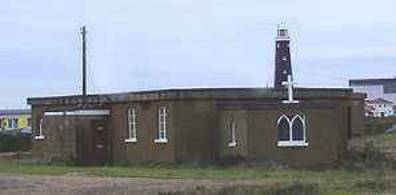
OK – a bit of a web search and I
have the answer. The building was part of PLUTO or Pipe Line Under The Ocean.
This submerged oil pipe was used to send fuel across for the D Day landings and
the building was a pumping station for oil. After the war it was converted into
a chapel and community centre. I have borrowed this picture from romneydeanery.org.uk.
There’s
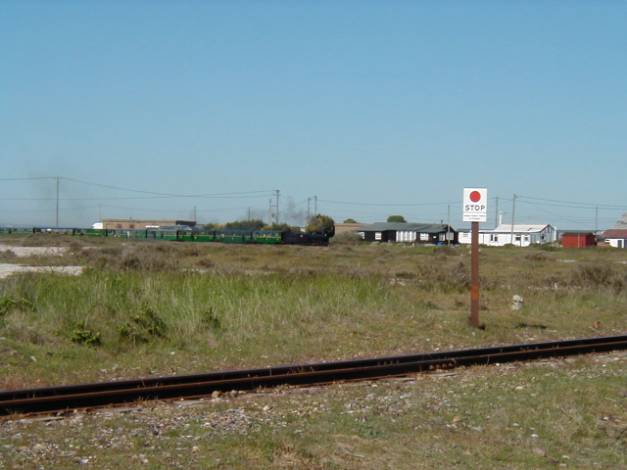
a general view. The track of the Romney, Hythe and Dymchurch Railway are in th foreground. The line has curved round from
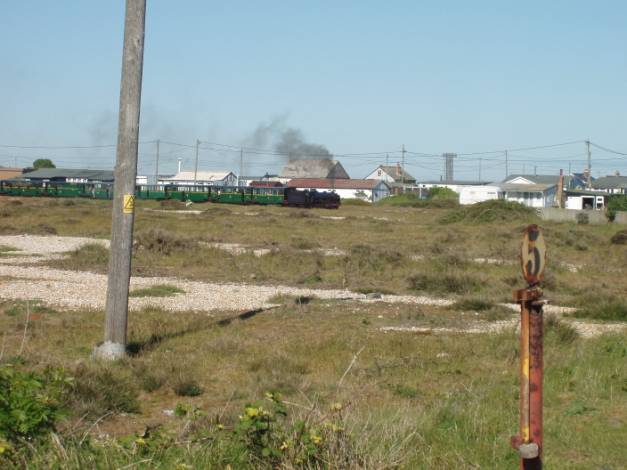
in front of the black and white buildings. Actually, a train is approaching.
The
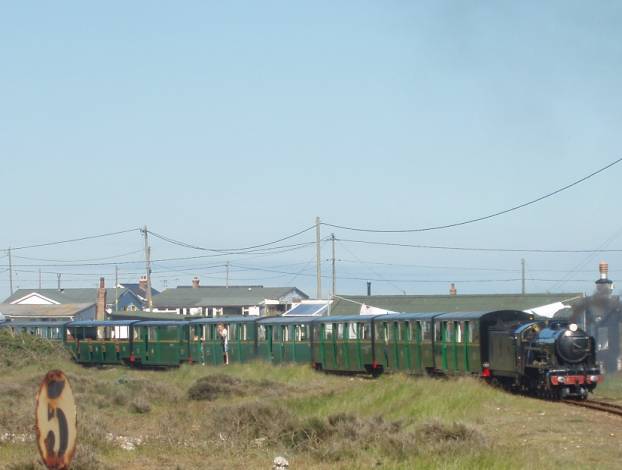
RH and DR is a miniature railway. The two rails are a mere 15 inches apart. It
was set up as a toy – the big trainset of a couple of chaps with money in the
1920s. It became very popular with tourists, actually provided a real transport
service for school trains were run, and as we have seen, it was comandeered for
the Second World War effort. With the growth of overseas holidays it fell into a
decline and I believe it nearly closed. But it seems to run succesfully again
and an hourly service heads out to
remote Dungeness. Incidentally, the vast bulk of the line is double track but at
Dungeness there’s a single track loop so trains don’t need turning.
It
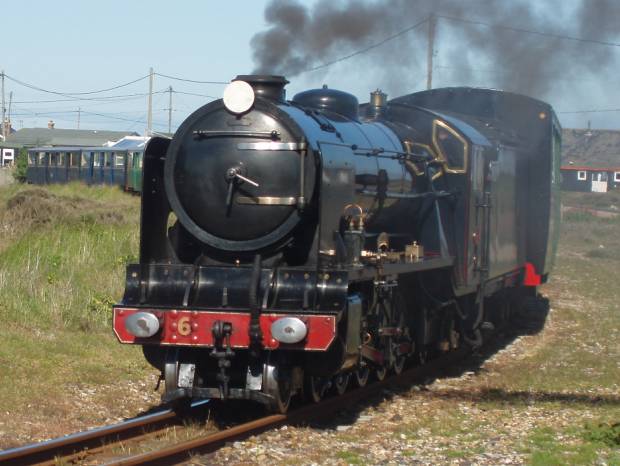
is quite a tight curve here for whilst we see one side of loco number 6, we can
see the other side of rear carriages.
Eventually,
number 6 stood at the Dungeness platform where a small boy, looking wistfully
into the cab adds to the scene with its lighthouse backdrop.
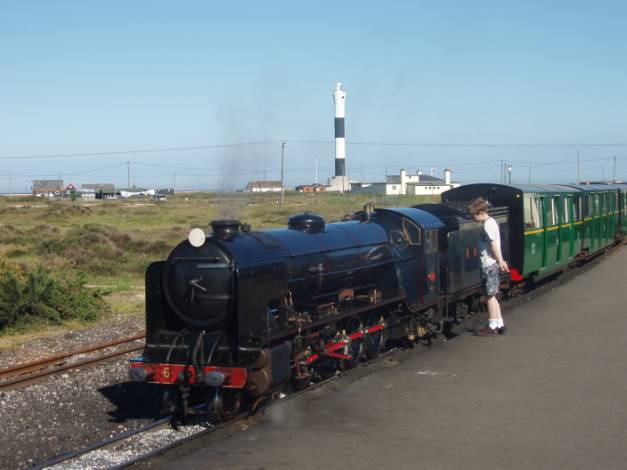
Number 6 is called Samson and dates from 1927. She (even with a male name locos are she) is one of the big locos on the line with a 4-8-2 wheel arrangement. Let’s see her set off on the return journey.
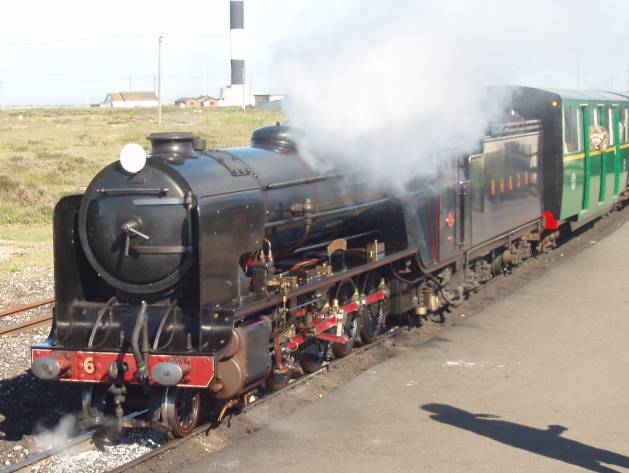
With a cloud of escaping steam she gets the long train under way.
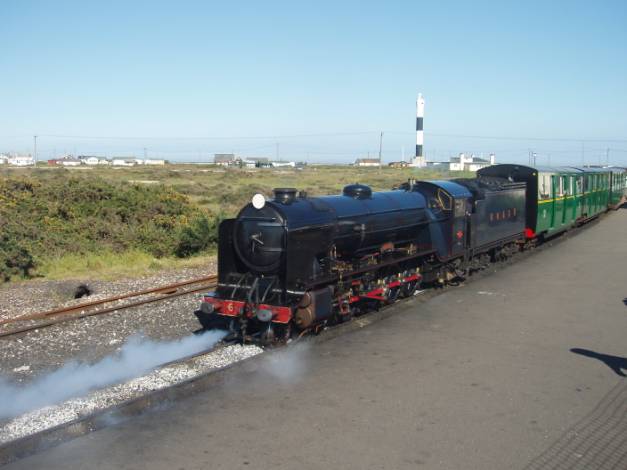
A blast of steam shoots out forwards. This clears any condensation from the cylinders after the driver’s tea break stop at Dungeness.
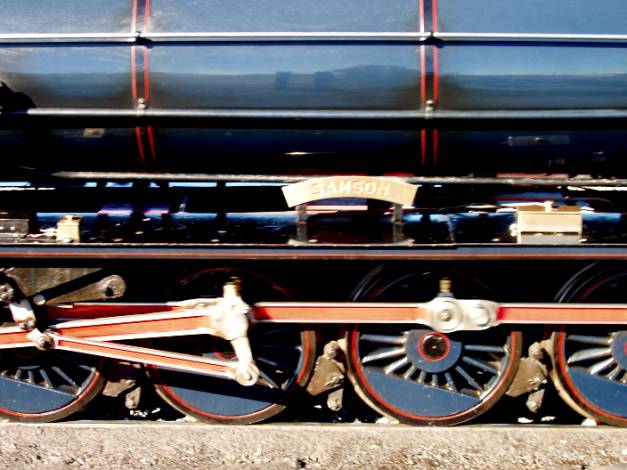
Wheels, motion and the Samson name plate.
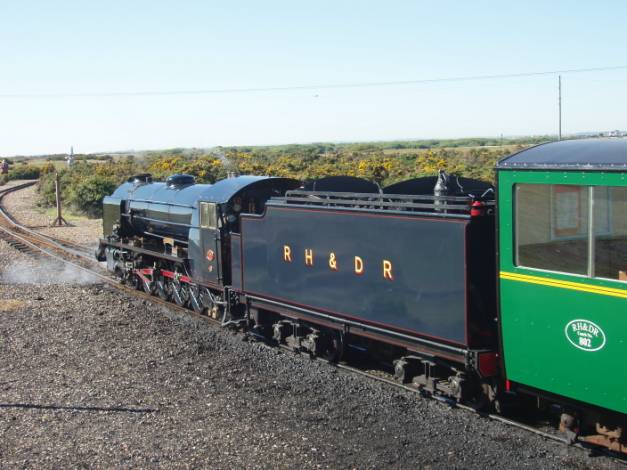
Away she goes, around the Dungeness loop and then back up to Hythe at the other end of the line.
And away we went too, for tea and tent were calling. Back at the tent, we had visitors.
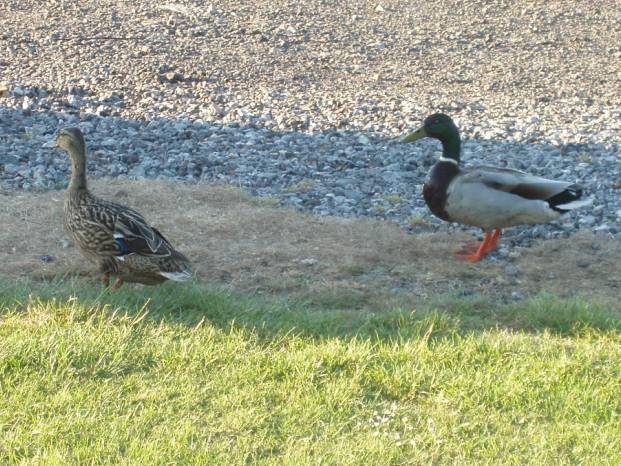
Some local mallards were ken to see if any food was forthcoming.
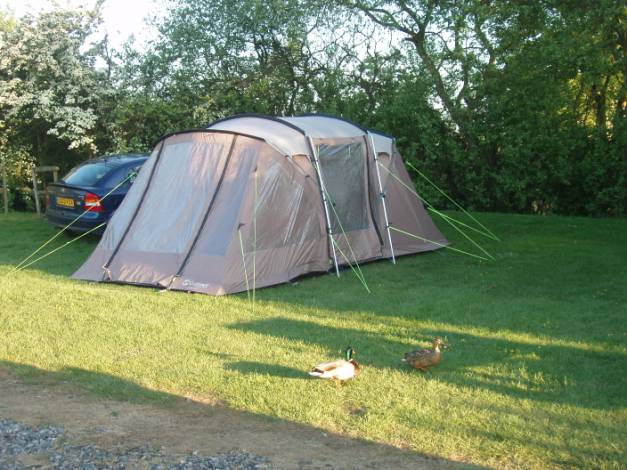
Having seen trains at Dungeness, what better than to play a game of trains, before nightfall, with silent humans and the wonderful, if noisy, wildlife.